
North American Control Panels for Machinery for the European Market: What U.S. Panel Builders Need to Change – Part 1
18 Nov 2026
Key Regulatory and Standards Considerations for U.S. Panel Builders Supplying Machinery to Europe
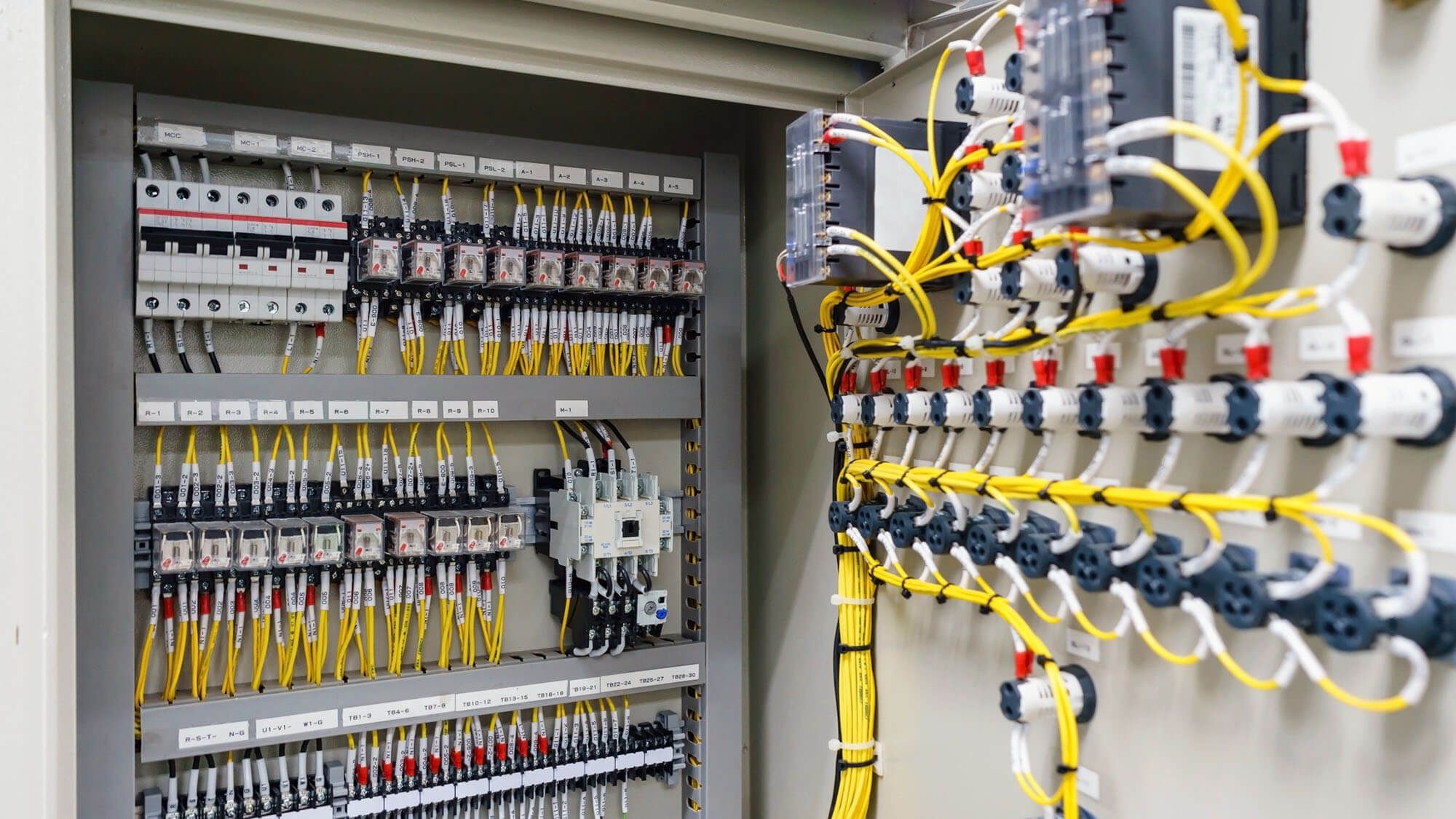
For many U.S. panel builders, UL 508A is the familiar technical framework for designing and constructing industrial control panels. It provides a structured North American approach covering panel construction, component suitability, wiring methods, markings, and short-circuit current rating.
However, when a control panel designed with a UL 508A-style approach is supplied for a machine destined for Europe, the compliance question changes. The issue is no longer only whether the panel follows North American industrial control panel practices, but whether the panel supports the conformity of the complete machine within the European regulatory framework.
In Europe, a machinery control panel is normally assessed as part of the electrical equipment of the machine, with EN/IEC 60204-1 as a key technical reference. Depending on the design and function of the panel, relevant parts of the IEC 61439 series may also need to be considered. In practice, where the panel or part of the panel has the characteristics of a power switchgear and controlgear assembly, the reference is typically EN/IEC 61439-2, particularly where switchgear, busbars, power distribution sections, high rated currents, or assembly-like characteristics are involved.
A UL 508A-style control panel can be a strong technical starting point, but it is not automatically ready for the European machinery market.
Start from the EU regulatory Framework, not only from the Panel Standard
The first change is conceptual. In the North American environment, the industrial control panel is often treated as a defined product, with specific construction rules, component requirements, markings, and a declared Short-Circuit Current Rating (SCCR).
In the European machinery environment, the control panel is usually part of the complete machine. It must therefore support the machine manufacturer’s conformity assessment process.
For machinery placed on the EU market, the applicable legal framework is currently the Machinery Directive 2006/42/EC. From 20 January 2027, the Machinery Regulation (EU) 2023/1230 will replace the Machinery Directive. For the panel builder, the main question is not only whether the panel is built according to UL 508A, but whether it allows the machine manufacturer to demonstrate compliance with the applicable EU legislation and harmonized standards.
This is a major shift. The panel must be consistent with the machine risk assessment, safety functions, protective measures, EMC strategy, electrical documentation, verification records, and final instructions for use.
It is also important to avoid one-to-one comparisons between standards. In the U.S. machinery environment, the closer counterpart to IEC 60204-1 is NFPA 79, not UL 508A. This highlights an important point: North American and IEC/EN standards do not always have direct parallels, because their scopes, regulatory roles, and application boundaries can be different. For this reason, the applicable framework must be checked carefully before assuming equivalence between standards.
Clarify which EU Legislation May Apply
Before quotation and design, the U.S. panel builder should clarify with the machine manufacturer, importer, or EU authorized representative which EU legislation applies to the final product.
For machinery control panels, the following legal instruments are usually relevant.
Machinery Directive 2006/42/EC or Machinery Regulation (EU) 2023/1230
The machinery legal framework addresses essential health and safety requirements for machinery. The electrical equipment must support the safety of the machine, including control functions, stopping functions, prevention of unexpected start-up, protective bonding, and interfaces with safety-related parts of the control system.
Low Voltage Directive 2014/35/EU
The LVD applies to electrical equipment designed for use within certain voltage limits, generally 50 to 1000 V AC and 75 to 1500 V DC. For a control panel supplied as electrical equipment in its own right, the LVD may be directly relevant. Where the panel is incorporated into machinery, electrical safety is normally considered within the machinery conformity assessment, but LVD principles remain technically important.
EMC Directive 2014/30/EU
The EMC Directive regulates electromagnetic compatibility and addresses both emissions and immunity. For panels containing drives, servo systems, switching power supplies, communication networks, safety networks, or sensitive control electronics, EMC must be considered from the beginning of the design.
Understand the Role of Harmonized Standards and the OJEU
A key point for U.S. panel builders is that European technical standards do not operate in the same way as North American installation and certification practices.
In the EU, directives and regulations establish the legal essential requirements. Harmonized standards provide a voluntary technical route to demonstrate conformity with those requirements. These standards are European standards developed by CEN, CENELEC, or ETSI following a request from the European Commission, and their references must be published in the Official Journal of the European Union, commonly referred to as the OJEU.
The use of harmonized standards remains voluntary. However, when a harmonized standard is correctly applied and its reference is published in the OJEU for the relevant EU legislation, it can provide a presumption of conformity with the corresponding essential requirements.
This has two practical consequences for U.S. panel builders:
- The applicable EN, EN IEC, or EN ISO standard must be identified, including edition and amendments.
- The machine manufacturer must verify whether the selected standard is harmonized under the relevant EU legislation and whether its reference is listed in the OJEU.
For industrial machinery panels, EN/IEC 60204-1 is typically one of the key standards considered for the electrical equipment of machinery. Depending on the panel construction, the EN/IEC 61439 series may also be relevant for switchgear or power assembly sections, with EN/IEC 61439-2 normally being the applicable part for power switchgear and controlgear assemblies.
Use EN/IEC 60204-1 as the Main Technical Reference for Machinery Electrical Equipment
For machine control panels supplied to Europe, EN/IEC 60204-1 is normally one of the most important technical references. It applies to the electrical, electronic, and programmable electronic equipment of machines from the point of connection of the supply to the electrical equipment of the machine.
IEC 60204-1 includes requirements and guidance related to topics such as:
- protection against electric shock
- supply disconnecting device
- overcurrent protection
- short-circuit current rating of the electrical equipment
- protective bonding
- control circuits
- emergency stop
- safe torque off for power drive systems
- EMC
- conductor identification
- technical documentation
- verification
This means that the panel builder should not limit the review to the enclosure and internal wiring. The control panel must fit the machine’s complete electrical safety concept.
A UL 508A-style panel may be carefully constructed and still require modification to align with EN/IEC 60204-1 expectations, especially in areas such as protective bonding, supply disconnecting means, control circuit design, conductor identification, safety interfaces, EMC, and documentation.
Another practical difference is the amount and nature of verification expected. Compared with a typical UL 508A-style panel approach, EN/IEC 60204-1 requires a series of verifications on the electrical equipment of the machine, and EN/IEC 61439-2 can require a much more extensive verification package for the assembly, including design verification and routine verification. This point should be considered early, because missing test records or verification evidence can be difficult to reconstruct after the panel has been built or shipped.
Determine whether EN/IEC 61439-2 is Relevant for Switchgear or Power Distribution Sections
Not every machine control panel supplied to Europe needs to be treated as a low-voltage switchgear and controlgear assembly. However, U.S. panel builders should not ignore the IEC 61439 series either. When the panel includes substantial power distribution, busbars, larger incoming feeders, multiple outgoing feeders, or sections that perform functions closer to switchgear than to simple machine control, EN/IEC 61439-2 is usually the relevant part to consider.
A useful reference point is EN/IEC 60204-1, clause 4.2.2, “Switchgear”. This clause states that, in addition to the requirements of IEC 60204-1, and depending on the machine, its intended use, and its electrical equipment, the designer may select parts of the electrical equipment of the machine that comply with relevant parts of the IEC 61439 series.
For most machinery control panel applications where IEC 61439 is selected because of switchgear or power distribution functions, the practical reference is EN/IEC 61439-2.
This wording is important because it confirms two practical points:
- IEC 60204-1 remains the primary reference for the electrical equipment of machinery.
- IEC 61439 is not automatically applicable to every control panel, but it may become relevant for specific parts of the electrical equipment, particularly switchgear, power distribution, or assembly-like sections.
In practical terms, a relatively small control cabinet containing a PLC, power supplies, relays, terminals, and limited motor control functions may mainly be assessed against EN/IEC 60204-1 as part of the machine electrical equipment.
By contrast, a panel or section including power distribution busbars, high rated currents, multiple feeders, functional units, compartmentalization, or significant short-circuit and temperature-rise considerations may require review against EN/IEC 61439-2 as the relevant part of the IEC 61439 series for power switchgear and controlgear assemblies.
Where EN/IEC 61439-2 is relevant, the panel builder may need to address topics such as:
- rated current of the assembly or section
- rated diversity factor
- temperature-rise performance
- dielectric properties
- short-circuit withstand strength
- protective circuit effectiveness
- clearances and creepage distances
- degree of protection
- internal separation, where required
- mechanical operation
- routine verification
- assembly documentation and design verification evidence
The key question is:
Is this only a machine control panel, or does any part of it function as switchgear or as a low-voltage power assembly for which EN/IEC 61439-2 should be considered?
Answering this question early helps avoid redesign, missing verification records, and unclear responsibilities between the U.S. panel builder and the European machine manufacturer.
Understanding the European regulatory framework is only the first step. The next challenge is translating it into concrete design decisions concerning components, supply characteristics, SCCR, machine safety, and EMC.

You may be interested in...
UL 508A Panel Builder Certification for Industrial Control Panels
Intertek's ETL Panel Builder Certification Program for custom Industrial Control Panels delivers a cost-efficient approach to UL 508A / CSA C22.2 No. 286 Certification

Industrial Solutions | Intertek
We provide quality assurance, testing, inspection, and certification for the Industrial industry, as well as education and advisory services for your industrial production, equipment, assets, and processes with our expertise and diverse services across global operations and supply chains.